
The written teacher evaluation and classroom observation information will help clarify the potential causes of a child’s difficulty in the classroom. In order to help a child, the teacher and the parents must consider many possible causes for the student’s difficulty. Without a careful evaluation, a child may be inappropriately labeled as a “behavior problem” or “special needs”.
Classroom Difficulties (Part 8: Never Tell)
An extremely important thing to note is the child should not be told they are personally being observed. People that know they are being observed tend to step up their game. The teacher should notify the students that someone is visiting the class to observe the teacher or may have a student in the class next year and seeing how they do things.
Is your student mislabeled as special needs or a behavior problem? Tomorrow we will address this as our series on classroom difficulty continues.
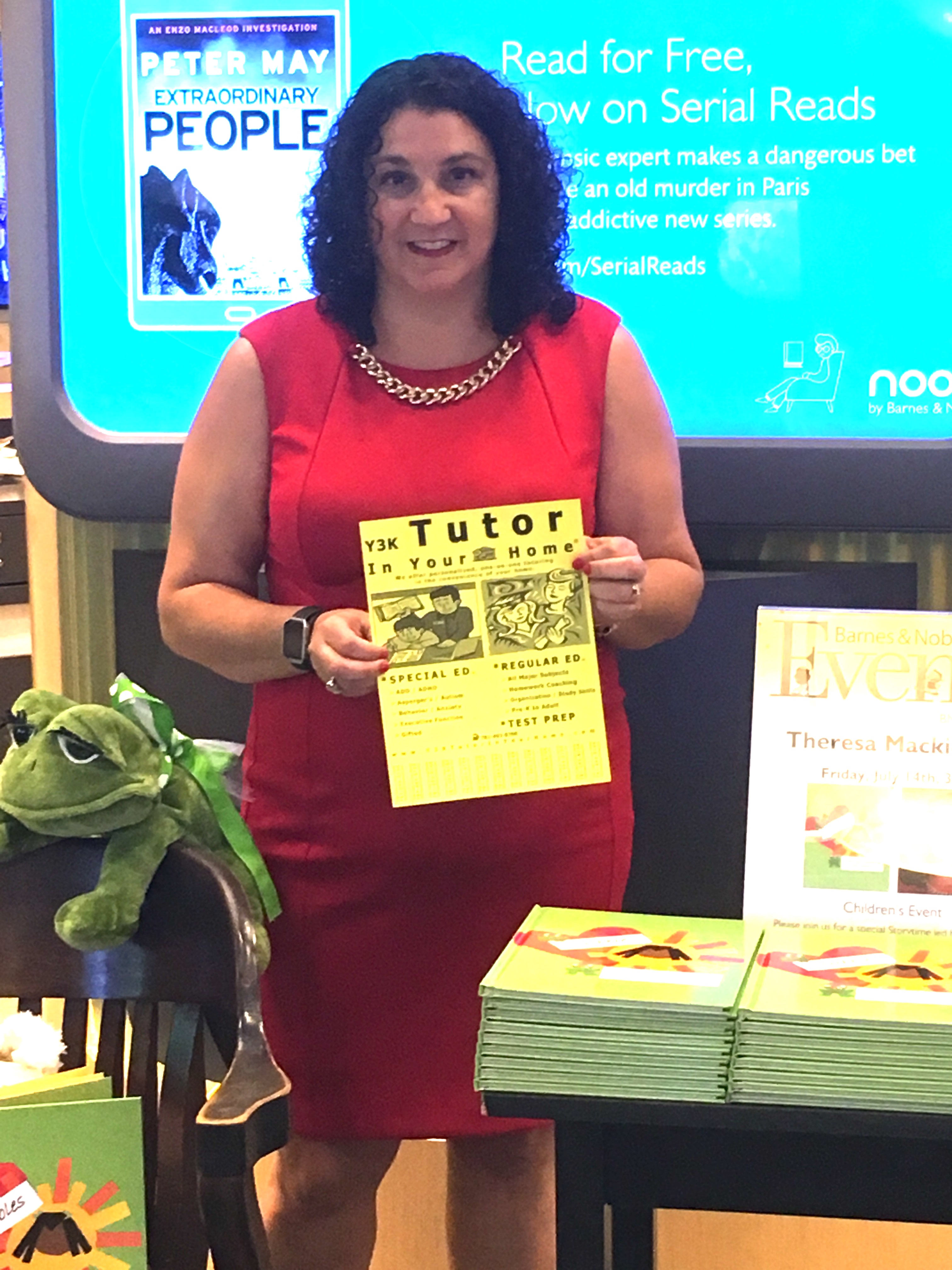
Theresa Mackiewicz Endorses Y3K Tutor In Your Home
Famous author Theresa Mackiewicz took time out of her North American book tour to tell her fans about Y3K Tutor In Your Home tutoring and test preparation services. We are grateful for the endorsement and support from this successful children’s author and educational expert. In this picture Theresa Mackiewicz proudly displays our Y3K Tutor In Your Home flyer to the crowd of hundreds of families that came out to get an autographed copy of her new book Scribbles at Barnes & Noble in Framingham, MA.
Summer Tutoring is the Answer
Don’t lose the previous 10 months worth of gains. Y3K Tutor In Your Home summer tutoring is the answer.
Thinking Assault
No problem can stand the assault of sustained thinking.
ADD/ADHD Focus Strategy #1: Exercise Ball
An exercise ball that would usually be found in a gym is a great substitute for the traditional school chair. Sitting on this giant ball requires the student to sit in the proper posture to stay balanced. This forces them to use their core muscles. When students are using their energy to actively sit, they tend be more attentive and focused.
Y3K Tutor In Your Home’s ADHD Quiz #7: Eating Fish
Y3K TUTOR IN YOUR HOME’S ADHD QUIZ #7: EATING FISH
Q: True or False: Pregnant women who eat lots of fish are more likely to have children with ADHD?
A: True. Initial research suggests that pregnant women who eat lots of fish – especially tuna, swordfish and other fish with high mercury levels are more likely to have children with ADHD. Researchers from the Boston University School of Public Health tracked 788 Massachusetts children between 1993 and 1998. Then they had the children’s mothers keep food diaries while they were pregnant so they could see how much fish the women ate. They took hair samples from them after they gave birth so they could test their mercury levels.
Eight years later, they asked the children’s teachers if the kids exhibited ADHD-like symptoms, such as hyperactivity, impulsiveness and inattentiveness. The researchers concluded that the women who had the most mercury in their hair were 60% more likely to have a child who exhibited ADHD-like behavior.
Y3K Tutor In Your Home’s ADHD Quiz #6: Pregnancy
Y3K TUTOR IN YOUR HOME’S ADHD QUIZ #6: PREGNANCY
Q: True or False: There is a link between smoking and drinking while pregnant and ADHD?
A: True. Studies have shown a link between smoking and alcohol use in pregnant mothers may increase ADHD risk.
Y3K Tutor In Your Home’s ADHD Quiz #5: Genetics
Y3K TUTOR IN YOUR HOME’S ADHD QUIZ #5: GENETICS
Q: True or False: ADHD can be passed down from parent to child?
A: True. Studies have shown that ADHD runs in families. Several genes have been identified that may increase risk.
Y3K Tutor In Your Home’s ADHD Quiz #4: Gender
Y3K TUTOR IN YOUR HOME’S ADHD QUIZ #4: GENDER
Q: Which gender is about 2 times more likely than the other to have ever been diagnosed with ADHD?
A: Boys
- « Previous Page
- 1
- …
- 3
- 4
- 5
- 6
- 7
- …
- 11
- Next Page »
